 Dan Ikwee
 The idea of journeying from Nairobi to Mombasa by bus had always seemed almost effortlessly straightforward, a simple line on a map, and whenever I heard others recount their experiences. Most would describe it with a casual shrug, painting a picture of a rather ordinary overnight passage – you’d just step onto the bus in Nairobi, perhaps drift off for a few hours, and then, as if by magic, awaken somewhere along the shimmering coast, your destination miraculously at hand. Yet, having finally embarked on that very trip myself, I quickly came to understand that the reality held far more texture and depth than those sparse online anecdotes or quick conversations ever managed to convey.
This was not merely a matter of transportation, a mechanical shift from the bustling heart of one city to the laid-back rhythm of another. It was much more.
Indeed, it truly unfolded into one of the most uniquely memorable and deeply imprinted travel experiences I have had the privilege of encountering across the expansive landscapes of Kenya, a journey that peeled back layers I hadn’t known existed.
The evening began with a distinct sense of anticipation, precisely at 7:00 PM. There I stood, a lone figure amidst the swirling currents of Nairobi’s vibrant downtown streets, my trusty backpack slung over one shoulder, its weight a familiar comfort. Inside, nestled among the essentials, were the silent promises of an overnight adventure: a soft neck pillow for elusive sleep, an assortment of snacks to ward off midnight hunger pangs, a warm hoodie against the inevitable chill, and a reserve of excitement bubbling within me, enough to power through many hours of wakefulness. Around me, the city pulsed with an electric energy. The deep, guttural hoots of arriving and departing buses tore through the air, creating a constant, rhythmic bass. Conductors, their voices raspy from endless repetition, bellowed out destination names with an urgent, almost poetic cadence, each shout a siren call to weary travelers. Passengers, a river of humanity, navigated the uneven pavement, their suitcases dragging behind them like loyal, heavy companions, leaving momentary scuffs on the urban canvas. And everywhere, street food vendors, with their small, portable kitchens, engaged in a lively dance, their final, hurried sales before the night swallowed the city and the long-haul journeys truly began.
Nairobi, in that twilight hour, didn’t just feel alive; it felt utterly incandescent, a vast, breathing entity on the cusp of its nocturnal transformation.
For a fleeting moment, a sliver of doubt, cool and sharp, pierced through my rising excitement. Was embracing this overnight bus journey to Mombasa truly the wisest decision? I allowed the question to hover, a silent challenge in the midst of the clamor.
My mind, an archive of whispered warnings and cautionary tales, began to conjure all manner of potential travel woes:
The specter of buses running hours behind schedule, their timely departures mere suggestions.
Tales of reckless drivers, weaving through the inky darkness with a disconcerting disregard for the clock or the comfort of their human cargo.
The communal plight of sleepless passengers, their exhaustion compounded by the endless drone of the road.
The biting, relentless chill of air conditioning is an unwelcome constant even in the tropical night.
The interminable frustration of traffic jams, stretching like sluggish serpents through the urban sprawl.
The grim reality of uncomfortable seats, promising a night of relentless fidgeting and stiff limbs.
And, the peculiar anxiety of nighttime highway stops, sudden halts in remote, unfamiliar darkness.
Yet, even as these familiar anxieties vied for my attention, another, stronger current tugged at me—a deep-seated desire for the “full experience.” I understood, intrinsically, that merely flying to Mombasa would have been undeniably swifter, a blur of clouds and tarmac, and certainly, traversing the land via the SGR train would likely have offered a more cushioned, comfortable passage. But my heart yearned to witness Kenya through a different lens, to peel back the layers of its landscape and its people in a way that truly resonated. I was driven by a genuine curiosity, an insistent need to experience the long, unfolding narrative of the road trip between Nairobi and the coast, to live it precisely as countless ordinary travelers do, day after ordinary day.
And in truth, despite all my mental preparations and whispered cautions, I remained utterly unprepared for the kaleidoscope of events that would unfold during those twelve hours of transit.
The deliberation behind my choice to journey to Mombasa by bus was not a casual one, but rather a conscious decision born of specific intentions. There exists, after all, a spectrum of viable methods for traversing the distance from Nairobi to Mombasa, each with its own rhythm and appeal:
One could opt for the aerial grace of flights, swiftly bridging the miles in a matter of hours.
Alternatively, the modern efficiency of the SGR train offers a streamlined, comfortable passage.
For those seeking privacy and control, a private car presents an appealing option.
And then, there is the communal, grounded experience of bus transport.
Yet, I deliberately settled on the bus for a constellation of reasons, each holding a particular weight in my estimation of authentic travel.
Primarily, there is an undeniable rawness, an unvarnished realism, that bus travel in Kenya imparts, offering an unfiltered encounter with the very pulse of the country. Unlike the detached aerial perspective from a plane, where the world below is reduced to an abstract tapestry of clouds and miniature landscapes, the long-distance bus journey unfurls a vivid, dynamic panorama right before your eyes. It allows for an intimate witnessing of the ever-shifting landscapes—the slow transition from urban sprawl to rural expanse, the fleeting glimpses of roadside towns waking or sleeping, the transient communities that coalesce around truck stops, the quiet dignity of distant villages, and, perhaps most profoundly, the vibrant, often boisterous, social fabric that defines Kenyan travel culture itself. It is a constant, moving tableau.
Secondly, and undeniably a practical consideration, embarking on this journey by bus is considerably more economical.
Depending on the specific bus company chosen and the seasonality of travel, a ticket for the Nairobi to Mombasa route typically falls within a range of approximately KSh 1,500 to KSh 3,500. This starkly contrasts with the cost of flights, which can effortlessly soar beyond Ksh 10,000 during peak travel seasons, making buses a consistently attractive and accessible option for those traversing Kenya with a mindful eye on their budget.
Thirdly, and perhaps most personally, I sought both compelling content and deeply etched experiences for my burgeoning travel blog.
As an individual who genuinely relishes the endeavor of documenting realistic travel experiences within Kenya, I held a firm conviction that this particular trip would prove to be a rich vein, yielding an abundance of incredible stories, nuanced observations, and invaluable lessons that would resonate with my readers.
And as it turned out, my conviction was not misplaced; I was absolutely right.
The act of preparing for this journey became an almost ritualistic process, a necessary prelude. It is a common misstep, I’ve observed, particularly among those new to the labyrinthine world of Kenyan long-distance bus travel, to profoundly underestimate the demands of such an undertaking.
A twelve-hour overnight journey, stretching across the country’s breadth, is not a whimsical stroll; it unequivocally calls for meticulous preparation. It demands foresight, a careful winnowing of needs from wants, and an understanding of the conditions ahead.
Earlier that afternoon, I had dedicated a deliberate block of time to the critical task of packing, distilling my possessions down to only the absolute essentials, each item chosen with a purpose:
A light hoodie, tucked away with the foresight that buses, no matter how warm the departure city might be, inevitably transform into chilly caverns once night descends and the air conditioning finds its unforgiving rhythm.
My earphones are a small shield against potential noise and a gateway to personal sonic escapes.
A power bank, fully charged to its brim, a crucial lifeline for keeping my devices alive through the long hours.
A bottle of drinking water is a simple yet vital companion for hydration.
A small pack of wet wipes, for those moments when a quick refresh feels like a small luxury.
An assortment of snacks, carefully chosen to combat boredom and unexpected hunger.
My travel pillow, a humble promise of slightly less agonizing sleep.
My phone charger is an obvious but often forgotten essential.
And finally, my small backpack itself is compact and manageable.
I had made a conscious decision, quite deliberately, to steer clear of anything resembling large or cumbersome luggage. The thought of wrestling with heavy bags in the dim light of night, or navigating the often-chaotic environs of a bus stop, already felt like a potential source of unnecessary stress and discomfort. Simplicity, I reasoned, would be my ally.
Beyond the physical packing, I had also ensured my ticket was secured earlier in the day, a small act of prudence designed to circumvent the inevitable last-minute surge in prices that often accompanies popular routes.
The landscape of bus travel between Nairobi and Mombasa is populated by several established companies, each vying for the traveler’s patronage, including:
Dreamline Express, a name frequently whispered with a certain reliability.
Modern Coast, a veteran on the route, carrying a long history.
Mash Poa is often associated with a touch of enhanced comfort.
Simba Coach is known for its consistent service.
Tahmeed, a familiar presence, particularly on coastal journeys.
And Coast Bus, another enduring fixture.
After a thorough, albeit quick, comparison of prices, a scan of online reviews, and a careful consideration of various departure times, I had finally settled on a night bus that promised to depart from Nairobi around 8:30 PM. It felt like a solid plan, a neatly laid out sequence of events.
At least, that was the carefully constructed plan I held in my mind, a fragile blueprint against the unpredictable currents of travel.
By approximately 7:15 PM, as the sun dipped beneath the horizon, Nairobi’s Central Business District had already undergone its profound metamorphosis, transforming into a swirling vortex of complete nighttime chaos. It was a scene both exhilarating and overwhelming.
With every step I took, drawing me closer to the labyrinthine cluster of bus booking offices, the streets seemed to constrict, growing denser, more frenetic with the surging tide of humanity. The air thrummed with raw energy.
From every direction, conductors, their voices amplified by the sheer necessity of being heard, unleashed their booming cries:
“Mombasa! Mombasa! Last bus! Don’t miss the last bus!” Their urgent appeals sliced through the din.
Passengers, a diverse multitude, surged and scattered in different directions, a determined resolve etched on their faces, their bags dragging behind them in a steady scraping symphony across the concrete. Meanwhile, boda bodas, those ubiquitous motorcycle taxis, executed their daring, often perilous maneuvers, squeezing through impossibly narrow gaps in the choked traffic, their engines buzzing like angry bees. The very atmosphere was a rich, almost intoxicating blend of scents: the smoky, comforting aroma of roasted maize, mingling inseparably with the sharp, metallic tang of diesel fumes, creating a distinctly urban perfume.
And amidst this vibrant chaos, an army of street vendors moved with an almost practiced grace, weaving through the throng, their voices a continuous murmur of sales pitches, offering an array of last-minute travel necessities and comforts:
Ice-cold sodas, a momentary relief from the heat.
Packets of biscuits, a simple snack for the long hours ahead.
Headphones, a gateway to personal peace in a noisy environment.
Bottled water, another essential, silently offered.
Phone chargers, for those who forgot or needed an extra.
And small, inviting bags of groundnuts, a classic Kenyan road trip treat.
The entire scene, for all its undeniable intensity and slight madness, vibrated with an undeniable undercurrent of excitement, a shared anticipation for journeys yet to unfold.
Inside the somewhat cramped booking office, a different, more subdued energy prevailed. Passengers occupied every available seat, a tableau of impatience and quiet expectation, each silently willing the clock forward, waiting for the elusive boarding instructions. Some among them exuded an aura of seasoned experience, their relaxed postures and calm gazes speaking volumes of many journeys undertaken. Others, however—and I noted them particularly, recognizing perhaps a mirror of my own nascent anxieties—especially those embarking on their first long-distance night trip, wore their nervousness quite visibly, a subtle tension in their shoulders, a slight furrow in their brows.
I found myself, almost unconsciously, checking my ticket multiple times, the worn paper a tangible anchor, a small ritual to quell the slight flutter of worry that I might, through some improbable mix-up, find myself on the wrong bus, heading in an entirely unintended direction.
One observation that struck me with immediate clarity, a testament to the route’s significance, was the sheer, breathtaking diversity of the passengers gathered. It was a microcosm of Kenya itself, a rich tapestry of humanity bound by a shared destination:
There were families, their faces alight with the promise of holidays and cherished reunions, children clutching stuffed animals.
University students, perhaps returning home after a semester, or embarking on new adventures, their youthful energy palpable.
A smattering of tourists, their eyes wide with curiosity, soaking in the vibrant chaos, eager to explore the country’s coastal allure.
Business travelers, their expressions more focused, likely contemplating deals and meetings awaiting them at the journey’s end.
Hardy backpackers, their gear suggesting longer, more adventurous sojourns across East Africa.
Coastal residents, their journey a homecoming, returning to the familiar embrace of their ancestral lands.
And even foreign visitors, venturing beyond the well-trodden paths, are seeking a deeper immersion into the heart of Kenya.
The Nairobi to Mombasa route, I realized, was far more than just a road; it was a living artery, truly connecting the disparate, vibrant segments of Kenya’s diverse population.
Our bus was scheduled to depart at precisely 8:30 PM, a time etched firmly into my ticket and my mental calendar. The minutes ticked by, each one seeming to stretch into an eternity. By 9:00 PM, a full thirty minutes past our designated departure, the bus remained stubbornly, frustratingly immobile. A collective sigh, almost imperceptible at first, began to ripple through the cabin.
The subtle undercurrent of impatience among the passengers slowly, almost inevitably, intensified. What began as murmurs soon escalated into more direct, albeit polite, inquiries directed at the conductors, who seemed to materialize and vanish with an exasperating fluidity, offering vague, non-committal updates. The explanation, when it finally emerged through the haze of speculation, was that another bus, arriving from the western reaches of Kenya, had unfortunately caused an unexpected snarl of traffic around the terminal area, creating a domino effect of delays.
This particular reality, I mused, was one that many polished travel blogs, with their curated narratives of seamless journeys, rarely deigned to mention: the simple, profound truth that delays are not just a possibility, but a fairly common and often unavoidable facet of long-distance bus travel within Kenya. They are, in many ways, part of the fabric of the experience.
Then, at approximately 9:20 PM, a low, hesitant rumble finally vibrated through the floorboards. The engine, after its prolonged silence, coughed to life, a promise of movement.
A wave of relief, tinged with a delicious irony, swept through the cabin. Everyone, with a shared, knowing glance, erupted into a round of sarcastic applause, a collective, good-natured acknowledgment of the delay and the long-awaited liberation.
And just like that, with a final, shuddering lurch, the long, immersive overnight journey from Nairobi to Mombasa officially commenced, carrying us into the unfolding night.
Observing Nairobi at night, as its vibrant tableau slowly recedes and transforms through the bus window, possesses a strangely captivating, almost cinematic quality. It’s a moment of quiet reflection, a farewell to the urban sprawl.
The brilliant, chaotic tapestry of city lights, a glittering constellation of human endeavor, gradually begins to dim and dissipate, softening at the edges as the bus smoothly merges onto the Mombasa Road. The towering, concrete behemoths that define the cityscape slowly melt away into the background, their imposing silhouettes gradually replaced by the sprawling, less defined contours of industrial zones, signaling a shift from the crowded, residential scenery to something more functional and utilitarian.
Inside the bus, a tangible transformation took hold as well. The initial bustle of boarding, the last-minute adjustments, gave way to a quietude, a shared settling into the rhythm of the journey. Passengers, as if on cue, embraced their individual strategies for the long hours ahead.
Some, their heads already lolling against the seats, succumbed almost immediately to the gentle lull of the moving vehicle, drifting into an early sleep.
Others, seeking a more personal escape, retrieved their earphones, their faces illuminated by the soft glow of their phone screens, playing music quietly, creating private soundscapes in the shared space.
A few still clung to the remnants of the day, their voices hushed, continuing phone conversations as the bus moved with a steady, determined pace through the thinning highway traffic, each word a final connection to the world they were leaving behind.
Initially, for me, sleep proved to be an utterly elusive dream. My mind, a whirlwind of sensory input, simply refused to quieten.
One part of me was still too buoyed by the sheer excitement of it all, the novelty of the experience, the adventure stretching out before me.
Another, perhaps more analytical, part of me remained keenly observant, a silent documentarian, soaking in every detail, cataloging the nuances of the journey:
The driver’s nuanced speed, the gentle accelerations and decelerations, a constant dance with the road.
The subtle shifts in road conditions, from smooth tarmac to occasional patches of rougher terrain.
The quiet, often telling, behaviors of my fellow passengers, each wrapped in their own world.
The intricate comfort level of the seats is a crucial factor for the long night ahead.
And the pervasive hum of the air conditioning, already beginning to assert its presence.
The bus itself, I admitted, exceeded my rather modest expectations. It was surprisingly comfortable for a long-haul vehicle. The seats, while not luxurious, offered a decent recline, allowing for a semblance of rest. Crucially, there was accessible charging, a modern lifeline for digital nomads. And the legroom, though not generous, was certainly manageable, allowing for minimal fidgeting.
However, as the hours bled into the deep stillness of midnight, the air conditioning, initially a welcome balm, began its insidious transformation. It became not just cold, but truly, piercingly frigid, a stark contrast to Nairobi’s balmy evening departure.
This, I realized with a shiver that had nothing to do with fear, was an absolutely vital piece of advice for anyone contemplating an overnight journey from Nairobi to Mombasa:
Always, without fail, carry robust, warm clothing. The kind that offers genuine protection.
No matter how oppressively hot Nairobi might feel in the hours leading up to departure, no matter how confident one might be in the balmy embrace of the equatorial night, the reality of overnight buses is a starkly different experience. They invariably transform into cold chambers after several hours of relentless air conditioning on the open road, leaving unprepared travelers shivering in the dark.
As the clock crept towards midnight, the highway outside became a corridor of deepening quiet. The last vestiges of city traffic had thinned to an occasional murmur, replaced by the rhythmic drone of our bus.
Most of the passengers, lulled by the constant motion and the comforting hum, had finally surrendered to sleep, their breathing a soft, collective symphony in the dim light.
Outside the window, darkness reigned supreme, a vast, enveloping blanket that swallowed almost everything. Only the sporadic, fleeting beams of distant truck headlights pierced the inky blackness, like temporary stars on a moving canvas, along with the faint, warm glow emanating from tiny roadside trading centers, appearing and vanishing like fleeting mirages.
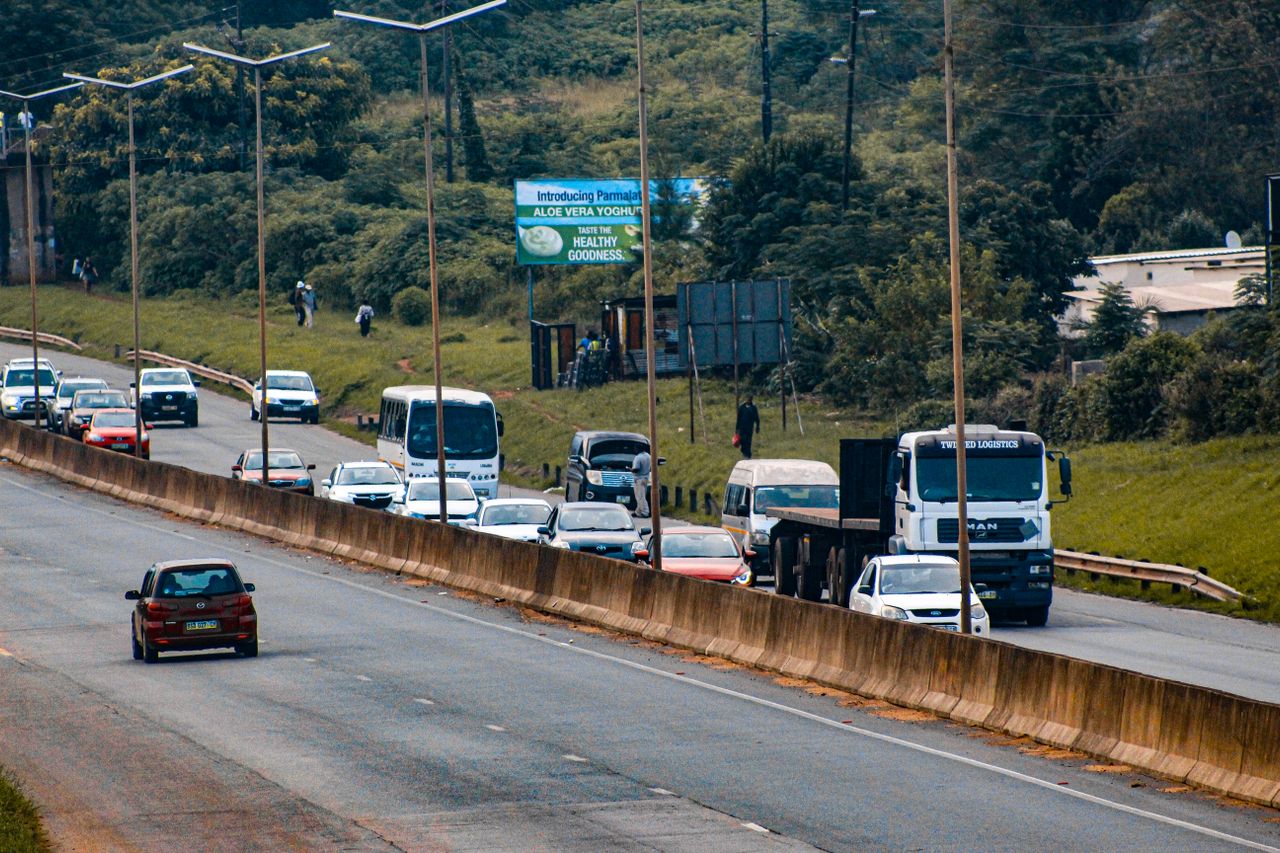
The highway, in those deep hours, belonged almost exclusively to the behemoths of the road: the large, rumbling cargo trucks. These titans of transport dominated the asphalt, their weighty presence a constant reminder of the economic lifeline we were traversing.
At times, our bus would be forced to slow its pace, joining an endless, snaking line of these massive trailers, each one laden with goods, tirelessly shuttling their precious cargo between the nation’s capital, Nairobi, and the bustling, vital port of Mombasa. It was a silent, nocturnal ballet of commerce.
I found myself staring out into the profound darkness, a strange, contemplative wonder washing over me. How many silent journeys, I mused, how many untold stories, unfolded along this very route, every single night, under the indifferent gaze of the stars?
The Nairobi-Mombasa highway, I realized with growing clarity, was far more than a mere strip of asphalt connecting two points. It was, in essence, one of Kenya’s most critical economic arteries, a pulsing corridor of commerce and human connection, inextricably linking the capital city to the vibrant coast and, crucially, to the strategic Port of Mombasa. Its importance stretched far beyond what the eye could see.
As our journey progressed, deepening into the vastness of the night, a silent understanding began to settle upon me, an appreciation for the wisdom of experienced travelers who invariably advise carrying ample entertainment during long bus rides. The reason became starkly, almost painfully, clear.
Twelve hours, I discovered, could feel extraordinarily long.
Indeed, incredibly, soul-achingly long.
At some point, perhaps around 1:30 AM, after hours of futile wakefulness, I made another determined attempt to court sleep. But the highway, it seemed, had other plans. Every few minutes, my nascent slumber would be brutally interrupted: the bus would either hit a particularly rough section of road, sending a jolt through the cabin; or the driver would brake suddenly, a swift, almost jarring deceleration; or we would slow perceptibly near one of the numerous police checkpoints that dotted the route, their flashing lights momentarily cutting through the darkness; or we would briefly, almost imperceptibly, stop in the heart of small, sleeping towns, their silence a stark contrast to our mechanical hum.
Against such constant interruptions, the sweet promise of sleep became an almost impossible dream, a mirage just out of reach.
Yet, in a strange, unexpected twist of fate, that persistent discomfort, that relentless, low-grade agitation, somehow began to integrate itself into the very fabric of the adventure, becoming an inseparable, almost cherished, part of the unique experience. It transformed from a nuisance into a defining characteristic.
Just as the hours blurred into the deep solitude of night, around 2:00 AM, the bus made an unexpected, yet utterly anticipated, maneuver. It smoothly veered off the main highway and pulled into the brightly illuminated parking lot of a roadside hotel, a welcome beacon of light in the vast darkness.
The sudden cessation of motion, the abrupt shift from the bus’s rhythmic sway to solid ground, acted like a universal alarm clock. Almost every passenger, roused from their various states of slumber or quiet contemplation, stirred immediately, a collective, groggy awakening.
The stop, a precious interlude in the long journey, was brief, lasting approximately twenty minutes. No sooner had the doors hissed open than a flurry of activity erupted. Passengers, many stiff-limbed and bleary-eyed, spilled out onto the cool night air, instinctively stretching their cramped legs, attempting to coax circulation back into numb extremities. Others, with a more singular purpose, headed directly towards the warm, inviting glow of the restaurant area, their cravings already defined, seeking the comfort of a hot cup of tea or a late-night bite.
This, I realized with a flicker of genuine fascination, was a particularly intriguing aspect of Kenyan overnight travel culture, a ritual woven into the fabric of these nocturnal journeys: the remarkable ability of people to somehow manage to consume substantial, full meals at the ungodly hour of 2:00 AM, their appetites seemingly unperturbed by the lateness. It was a testament to the endurance of hunger and the need for warmth.
Inside the bustling restaurant, the air was thick with the aroma of spices and hot beverages. Travelers, a temporary community, placed their orders with a practiced ease, seeking familiar comforts:
Warm, flaky chapati is a staple.
Steaming cups of tea, a vital source of warmth and comfort.
Fragrant pilau, a rice dish rich with spices.
Sweet, fried mandazi are perfect for a quick energy boost.
Succulent chicken, for those needing a more substantial meal.
And chilled soda, a refreshing contrast to the hot food.
The majority of the tables were occupied by truck drivers, their faces etched with the fatigue of endless miles, their conversations a low rumble in the background. From large, wall-mounted televisions, local music videos played loudly, their vibrant rhythms and melodies adding another layer to the lively, nocturnal scene.
Outside, the cold night air, crisp and invigorating, offered a welcome respite, a refreshing counterpoint to the enclosed warmth and stale air of the bus cabin, a chance to breathe deeply.
For the first time since our departure from Nairobi, standing under the vast, star-dusted sky, I truly felt the immense, sprawling scale of the journey we were undertaking. We were somewhere deep in the heart of the land, suspended between the capital and Mombasa, in the profound silence of the night, surrounded by fellow travelers from countless different origins, all united by the singular purpose of reaching the coast before the first blush of sunrise.
And somehow, in that shared, ephemeral moment, a profound sense of connection settled upon me, rendering the experience truly, beautifully unforgettable.
As the journey plunged deeper into the small hours, the segment of time spanning roughly 3:00 AM to 5:00 AM revealed itself as the most arduous section of the entire trip, a true test of endurance. This was the point where the various minor discomforts began to coalesce and magnify, forming a cumulative weight.
This was when the creeping tendrils of exhaustion truly took hold, tightening their grip with an unforgiving persistence.
When any hope of comfortable sleep completely evaporated, replaced by a restless, fitful state that offered no real solace.
When the forced body posture, held for hours, transitioned from mere stiffness to a dull, throbbing ache, a persistent pain that radiated through my limbs.
And when, inevitably, the passengers, a mirror to my own growing unease, began to grow noticeably restless, their movements became more frequent, their sighs more audible.
Several individuals in the cabin engaged in a silent, desperate ballet, constantly shifting their seating positions, twisting and turning, in a futile quest to find a more comfortable angle, a momentary reprieve from the relentless discomfort, to coax their bodies into a semblance of sleep.
Somewhere in the quiet gloom, a child’s cry, thin and reedy, began to punctuate the silence, repeating with a heart-wrenching regularity, a raw expression of their own exhaustion and discomfort.
From somewhere behind me, the rhythmic, guttural rumbling of a passenger’s loud snoring became an inescapable presence, a sonic torture that stretched for almost an entire hour, seemingly amplifying in the stillness of the night.
And the cold air conditioning, once just a chill, now felt truly unbearable, an icy siege against the body, seeping into bones and flesh.
At one particularly bleak moment, a wave of genuine doubt washed over me, and I honestly questioned the wisdom of my original choice, wondering why on earth I had chosen the rigors of the bus instead of the comparative ease and comfort of the SGR train. The regret was sharp, if fleeting.
But despite the mounting discomfort, despite the profound physical and mental toll, an odd, almost masochistic excitement still lingered, a quiet thrill in the sheer act of enduring the experience. There was something profoundly authentic about it.
This, I realized with a renewed clarity, was emphatically not luxury travel. This was not about pampering or effortless glide.
This, without a doubt, was real travel, raw and unvarnished, a true immersion into the unglamorous, yet utterly compelling, reality of the road.
Then, somewhere around 5:30 AM, after what felt like an eternity of profound darkness, broken sleep, and the relentless, almost hypnotic drone of highway driving, a faint, almost ethereal orange light began to manifest itself through the smudged canvas of the bus window. It was a slow, majestic emergence, the first delicate blush of dawn, and with it, the quiet, undeniable promise of our impending arrival towards the coast.
Initially, the majority of the passengers remained lost in the last, precious vestiges of sleep, their faces slack with exhaustion. The bus itself, which had been a crucible of murmurs and fidgeting just an hour before, had settled into an unusual, almost reverent quiet, disturbed only by the low, constant vibration of the engine, a steady pulse beneath our feet, and the occasional, dry cough from tired travelers beginning to stir, one by one, from their slumber.
I instinctively wiped a small patch of condensation from the windowpane with my sleeve, eager to gain a clearer, unobstructed view of the world outside, yearning for a glimpse of the transformation.
And what a transformation it was. The scenery had undergone a complete, breathtaking metamorphosis. The biting, cold atmosphere of Nairobi, a distant memory, had been entirely shed. The dry, dusty inland landscape, a familiar sight for hours, had slowly, almost imperceptibly, surrendered to a distinctly warmer, greener coastal terrain. Palm trees, their fronds swaying gently in an unseen breeze, now dotted the horizon, their slender forms a welcoming sight. The rolling hills had given way to flatter, more expansive vistas, and small trading centers, previously shrouded in the deep slumber of night, were now beginning to stir, hesitant pinpricks of light and activity as they awoke for the new day.
For the very first time during the entire, long journey, a genuine, unadulterated excitement surged through me once more, washing away the lingering fatigue and doubt. It was the feeling of nearing a true destination.
The closer we edged towards Mombasa, the more pronounced and undeniable the environmental shifts became, each change a confirmation of our progress:
The air grew perceptibly warmer, carrying with it a distinct, humid, saline kiss.
The verdant fronds of coconut trees began to appear with increasing frequency, their iconic silhouettes a definitive symbol of the coast.
The elegant, intricate lines of Swahili architecture slowly became visible, their unique cultural signatures emerging from the morning haze.
The roads, once dominated by larger vehicles, now buzzed with the smaller, more agile forms of tuk-tuks, their colorful bodies darting through the nascent traffic.
And the familiar, utilitarian billboards of Nairobi, with their urban advertisements, gradually gave way to those bearing messages and images distinctly coastal, a final signpost of our cultural shift.
Even the collective mood within the bus itself underwent a palpable change. Passengers, as if infused with a sudden jolt of energy, began to stir with renewed vigor, the fatigue of the night slowly peeling away.
Some immediately reached for their phones, their thumbs already navigating screens, checking messages and reconnecting with the world. Others, with an audible sigh of relief, began to call relatives and friends, their voices hushed but joyful, informing them of their imminent arrival, the long wait almost over.
Beside me, a passenger, with a dramatic, full-body stretch that seemed to articulate the collective exhaustion of the journey, simply stated, his voice thick with a shared understanding: “We survived.”
A wave of quiet, appreciative laughter rippled through the nearby seats, a moment of shared camaraderie.
And honestly, after spending what felt like an entire lifetime, almost a full night, confined within the moving capsule of that bus, his simple declaration truly did resonate with the profound, visceral feeling of having survived a significant, challenging undertaking.
At approximately 6:40 AM, the gentle murmur of traffic outside the bus windows slowly began to intensify, a clear indication that we were finally approaching the bustling perimeter of Mombasa town. The city, still draped in the soft, ethereal light of early morning, was slowly unveiling itself.
By now, the panoramas framed by the bus windows offered a strikingly different face of Kenya, a stark and beautiful contrast to the frantic energy we had left behind in Nairobi. Mombasa, even in its awakening, exuded a distinct aura; it felt undeniably slower, infused with a pervasive warmth, and possessed a wonderfully relaxed cadence, a palpable sense of ease that immediately embraced the weary traveler.
The early morning atmosphere was nothing short of beautiful, a tranquil symphony of sights and sounds:
The tall, elegant palm trees swayed ever so lightly, their fronds rustling like whispered secrets in the gentle coastal breeze.
Small, aromatic cafes were just beginning to unfurl their awnings, the inviting scent of brewing coffee mingling with the salty air, promising warmth and rejuvenation.
The ubiquitous matatus, Kenya’s vibrant public transport, were already beginning their daily operations, their colorful bodies a familiar sight as they navigated the awakening streets.
Street vendors, with an almost artistic precision, were meticulously arranging their piles of fresh, vibrant fruits, their displays a riot of color against the subdued morning light.
And motorbikes, agile and swift, wove through the narrow roads, their engines a soft, constant hum, adding to the symphony of the awakening city.
Despite the profound exhaustion that still clung to my limbs, a surge of pure, unadulterated excitement immediately bubbled up within me, an irrepressible joy at the imminent arrival at the fabled Kenyan coast. The long journey, the sleepless night, all seemed to dissolve in the face of this beautiful, welcoming vista.
After nearly twelve relentless hours of continuous travel, the sight of Mombasa finally materializing outside the bus windows felt not just like an arrival, but like a profoundly rewarding culmination, a hard-won victory.
However, the final ingress into the heart of the city proved to be a more protracted affair than anticipated, largely due to the already burgeoning morning traffic. This, I noted, was yet another subtle but significant detail that many travelers, still basking in the glow of having “survived” the overnight highway journey, often tend to overlook: even after navigating the challenges of the long haul, Mombasa’s urban traffic could, and often did, introduce its own set of frustrating delays to the final arrival times.
The bus, a large, lumbering beast now, navigated its way slowly through a series of winding roads, its progress deliberate and unhurried, before finally, with a soft sigh of hydraulics, reaching its designated drop-off point.
When the doors finally swung open, a collective rush, almost a stampede, ensued. Passengers, eager for liberation, spilled out into the morning air almost instantly, each person a tableau of their night’s journey.
Every face, without exception, bore the unmistakable signs of profound fatigue, a shared weariness.
Some travelers, their eyes alight with renewed energy despite their exhaustion, were eagerly anticipating joyous reunions with family members, their loved ones already scanning the crowd. Others, clearly tourists, immediately began snapping photos, their cameras a testament to the vivid new experiences unfolding, or diligently searching for the nearest available taxi, eager to reach their final destination.
The warm, humid coastal air enveloped me instantly, a soft, comforting embrace that stood in stark contrast to the preceding hours. After spending the entire night entombed within the freezing confines of the bus’s relentless air conditioning, stepping out into Mombasa’s wonderfully warm, fragrant morning atmosphere felt like an exquisite, almost intoxicating release, a profound sensory balm.
I stretched my back slowly, deliberately, each movement a careful reacquaintance with my own body, and in that moment, the full, undeniable reality of how physically exhausting overnight bus travel could truly be settled upon me with an undeniable weight.
It was then, as I felt the aches and stiffness radiating through me, that I fully understood the seasoned wisdom of experienced travelers, who invariably recommend dedicating a full, unhurried recovery day after undertaking any long-distance journey within Kenya. It wasn’t a luxury; it was a necessity.
So, the enduring question that lingers after such an odyssey: was the journey truly worth the effort, the discomfort, the long hours?
Honestly speaking — yes, unequivocally.
However, that affirmation comes with a crucial caveat: it is only “yes” if one approaches the experience with a clear and accurate understanding of what to expect, embracing the realities rather than clinging to idealized notions. Traveling from Nairobi to Mombasa by bus is not, by any stretch of the imagination, a luxury experience, unless one opts to pay a substantial premium for the most exclusive VIP coaches. And even then, the inherent challenges of spending twelve hours traversing Kenya’s extensive highways under the shroud of night remain, a constant companion.
Nevertheless, the experience itself, despite or perhaps because of its trials, transforms into something genuinely memorable, etching itself deeply into the traveler’s consciousness. It moves beyond mere transportation to become a story.
Here, then, is my honest, unfiltered breakdown of what truly stood out:
What I Found to Be Commendable and Rewarding
1. A Remarkably Accessible and Affordable Travel Option
In stark contrast to the often exorbitant costs associated with air travel, buses steadfastly remain one of the most budget-friendly avenues for traversing the considerable distance between Nairobi and Mombasa. This accessibility is a game-changer.
For intrepid budget travelers, for backpackers with their limited funds, for diligent students, and for tourists who are meticulously planning to stretch their travel budget as far as it can go, opting for bus travel proves to be an exceptionally practical and wise choice. This economic advantage truly positions bus travel as one of the preeminent and most sensible budget travel options available across Kenya, opening up journeys to a wider demographic.
2. An Unvarnished, Authentic Kenyan Travel Experience
The journey, in its entirety, unfurled before me a tapestry of realistic Kenyan travel culture, allowing me to observe and participate in its unique rhythms:
The distinctive rituals of highway stopovers, where diverse lives briefly intersect.
The often-vibrant, sometimes humorous interactions between passengers create a transient community.
The unique character of roadside hotels serves as nocturnal oases for weary travelers.
The ingrained routines and unspoken rules of overnight travel are a familiar ballet for many.
And the rich, often surprising, culture of long-distance bus travel itself is a microcosm of the country.
One truly experiences the heart and soul of the country in a profoundly different, more intimate way when traversing its landscapes by road, feeling the pulse of the land beneath you.
3. The Mesmerizing and Beautiful Transition between Regions
Witnessing Kenya slowly, subtly transform from the vibrant, bustling, undeniably urban environment of Nairobi into the distinctly warmer, more relaxed, and verdant scenery of the coast was a truly fascinating and deeply engaging spectacle, an unfolding documentary.
This entire, rich, panoramic experience is, by its very nature, entirely bypassed when one chooses to travel by air, reducing the journey to a mere leap from one point to another, devoid of the evolving narrative of the land.
4. The Sheer Convenience of Choice
The extensive network of bus services ensures that operations run daily, offering travelers a remarkable degree of flexibility in their departure times, catering to a wide array of schedules and preferences. These options include:
Day buses, for those who prefer to travel under the watchful eye of the sun.
Overnight buses, for those who embrace the cloak of darkness and the promise of dawn at their destination.
And even premium VIP coaches, offering a slightly elevated level of comfort and service.
This abundance of choices truly empowers travelers, allowing them to tailor their journey to their specific needs and desired pace.
The Hurdles and Challenges I Navigated
Despite the overall enjoyment and profound satisfaction derived from the journey, there were, as with any authentic adventure, several distinct moments that presented significant difficulty and discomfort.
1. The Elusiveness of Proper Sleep
Achieving any semblance of truly restful sleep within the confines of a moving bus proves to be an exceedingly difficult feat for many, myself included.
Even with the benefit of seats that offered a modest recline, the relentless, constant motion of the vehicle, combined with the subtle yet pervasive vibrations of the road, conspire to render quality, uninterrupted sleep an almost impossible aspiration. If you are, by nature, a light sleeper, it is paramount to prepare yourself mentally for this particular trial.
2. The Insidious Cold of the Air Conditioning
This particular aspect of the journey, I must confess, came as the most pronounced surprise, a shock to my initial expectations.
A considerable number of long-distance buses operating within Kenya tend to become piercingly, unforgivingly cold throughout the overnight hours. Without the foresight to carry a warm hoodie or a comforting blanket, the journey can swiftly devolve into a genuinely uncomfortable, even shivering, ordeal.
3. The Unavoidable Reality of Delays
Kenyan road travel, I quickly learned, is an inherently unpredictable beast.
A confluence of factors—ranging from unexpected traffic congestion, capricious weather patterns, unforeseen mechanical issues with the vehicle, to general highway congestion—can, and frequently does, conspire to significantly delay arrival times. It is a fundamental truth of the road. One should always, as a matter of course, anticipate the possibility of such delays, building a mental buffer.
4. The Inevitable Onset of Body Fatigue
After the sheer endurance of sitting in a confined space for nearly twelve continuous hours, the body, quite naturally, begins to protest, expressing a profound sense of exhaustion.
Aching neck pain, persistent back discomfort, and the uncomfortable sensation of swollen feet are all exceedingly common companions during such extended journeys, physical reminders of the miles traversed.
The Financial Footprint of My Nairobi to Mombasa Bus Trip
One of the primary and most compelling reasons why a significant number of travelers gravitate towards bus services is their inherent affordability. This was certainly a factor for me.
Here is a rough approximation of my personal budget for this particular expedition:
Item Cost
Bus ticket Ksh 2,200
Snacks and water Ksh 500
Midnight meal stop Ksh 650
Tuk-tuk after arrival Ksh 300
Miscellaneous Ksh 350
Total Estimated Cost:
Approximately Ksh 4,000
When juxtaposed against the considerably higher expenditures typically associated with flights or even the alternative of private transport, this total expenditure still stands as remarkably affordable, especially for a comprehensive, cross-country journey within Kenya. It represents exceptional value for the immersive experience gained.
Navigating the multitude of bus companies that ply the Nairobi to Mombasa route daily can feel like a small task in itself. Based on a collection of recent reviews, various traveler experiences shared across platforms, and my own direct observations during the journey, several companies consistently emerge as the most popular and, by extension, often the most reliable choices:
Dreamline Express is frequently lauded for:
Their fleet of relatively modern buses offers a sense of up-to-date comfort.
The promise of comfortable seating is a crucial factor for long journeys.
And a reputation for professional and courteous service, ensuring a smoother ride.
Mash Poa holds a strong appeal among travelers who are specifically seeking:
The enhanced comfort of VIP seating options provides a slightly more luxurious experience.
The inclusion of entertainment systems provides a welcome distraction during the long hours.
And an overall reputation for comfortable overnight travel, mitigating some of the usual challenges.
Simba Coach has garnered a strong following, well known for:
Their consistently affordable ticket prices, make travel accessible to many.
And a track record of reliable schedules, offering a greater degree of predictability.
Tahmeed Coach is often the preferred choice, particularly for:
Those embarking on coastal routes have established a strong presence and familiarity there.
And for its reputation for providing a generally smooth and uneventful travel experience.
Modern Coast, while historically quite popular and a long-standing player, has seen traveler experiences vary somewhat over time, suggesting that recent reviews are always worth checking.
Before committing to booking any bus, it is always a wise, indeed crucial, practice to:
Scrutinize recent reviews from other travelers, gaining insights into current service levels.
Double-check and confirm the exact departure times, ensuring alignment with your schedule.
Diligently compare the options between VIP and standard services, weighing comfort against cost.
And, especially during peak holiday periods, it is highly advisable to book your ticket well in advance to secure your spot and avoid disappointment.
Drawing from the very fabric of my own experience, having now traversed this route firsthand, these are the most significant and profound lessons that crystallized for me, essential guidance for anyone contemplating an overnight journey to Mombasa.
Embrace Warm Clothing
Never, under any circumstances, underestimate the deceptive nature of overnight cold temperatures that can permeate bus interiors. A reliable hoodie or a light jacket is not merely a convenience; it is an essential piece of your travel arsenal.
Ensure Your Devices Are Fully Charged
While some modern buses are indeed equipped with convenient charging ports, it is an unfortunate reality that not all of them consistently function as intended. Always, without fail, ensure you carry:
A fully charged power bank is a portable lifeline for your electronics.
The appropriate charging cables for all your devices are meticulously checked.
And a backup pair of earphones, to ensure your private world of sound remains accessible.
Refrain from Heavy Meals before Traveling
Consuming heavy, substantial meals prior to embarking on an overnight journey can significantly contribute to discomfort, particularly when the bus encounters rough patches of road, leading to an upset stomach or general unease. Opt for lighter fare.
Keep Your Essentials within Arm’s Reach
It is a cardinal rule of travel to never place your most valuable items deep within your main luggage, rendering them inaccessible. Instead, ensure that your truly essential items are kept close at hand, within easy and immediate reach:
Your phone is for communication and navigation.
Your wallet, containing your financial lifelines.
Your passport or national ID, for identification purposes.
A bottle of water, for hydration throughout the night.
Your earphones, for personal space and entertainment.
A neck pillow, for any chance of rest.
And a small pack of wet wipes.
Utilize a Neck Pillow
This seemingly simple accessory, often overlooked, can make an astonishingly significant difference in your overall comfort during overnight travel, transforming what might be a night of painful jostling into a slightly more bearable experience.
Cultivate a Mental Preparedness for Delays
Patience, an often-tested virtue, is an absolutely crucial attribute to cultivate when embarking on long-distance travel within Kenya. Understanding and accepting that delays are a frequent, almost inevitable, part of the process will significantly enhance your experience.
The question of whether bus travel from Nairobi to Mombasa is genuinely safe is undeniably one of the most frequently posed and intensely searched queries online, a natural concern for any traveler.
From my own personal encounter, the entire trip, on the whole, conveyed a prevailing sense of safety. The journey felt secure, devoid of overt threats or anxieties.
However, despite this personal reassurance, it remains fundamentally important for all travelers to maintain a healthy degree of caution and vigilance, taking proactive steps for their own well-being.
Sensible safety recommendations include:
Exercising discretion by avoiding the overt display of expensive items or gadgets, which can draw unwanted attention.
Making the judicious choice to book with recognized and reputable bus companies, which tend to prioritize passenger security.
Maintaining constant vigilance over your luggage, ensuring it remains monitored and accounted for, particularly during stops.
Exercising caution and avoiding isolated areas during highway stopovers, remaining within the brightly lit and populated zones.
Inform trusted relatives or friends about your journey itinerary and expected arrival times, providing an additional layer of security.
And endeavoring to arrive at the bus station well in advance of the scheduled departure time, allowing for a calmer, less rushed boarding process.
While it is true that night travel inherently carries some measure of risk, the vast majority of major bus companies operating on this route are deeply committed to prioritizing and ensuring the safety and security of their passengers, making it a cornerstone of their service.
The perennial question that many prospective travelers inevitably grapple with is a simple yet pivotal one: “Should I choose the bus or the SGR train for my journey to Mombasa?” It’s a choice that often boils down to a fundamental trade-off of priorities.
Here, then, is my honest, personal comparison, distilled from my own experience and observations.
The Advantages That Bus Travel Presents
It is, in certain instances, the more economical choice, offering cost savings.
It provides highly flexible departure locations, with numerous pick-up points across Nairobi.
There are generally more frequent departure times throughout the day and night.
It delivers an authentic, ground-level road trip experience, allowing for direct interaction with the landscape.
And it offers richer material for storytelling, making for more compelling travel narratives.
The Advantages That SGR Train Travel Offers
It is unequivocally faster, significantly reducing travel time.
It provides a considerably more comfortable journey, with spacious seating and smoother rides.
It facilitates better, more restful sleep, due to the stable motion.
It is renowned for its more reliable timing, adhering closely to schedules.
And the experience is generally less physically exhausting, demanding less from the traveler.
In essence, if your primary concern and highest priority is comfort, an undeniable preference for ease and a smooth, unburdened journey, then without hesitation, the SGR train is the discerning choice for you.
However, if your spirit yearns for adventure, for the grit and realness of the road, and for the kind of realistic, unfiltered travel experiences that etch themselves deep into memory, then the bus, with all its challenges and profound discoveries, undeniably offers something truly unique and deeply enriching.
One particular facet of the journey that genuinely captivated and delighted me was the rich opportunity to observe the vibrant food culture that flourishes around the highway stopovers. These roadside restaurants, catering tirelessly to the constant stream of overnight travelers, have, over time, become an integral and cherished part of Kenya’s sprawling transport culture, offering much-needed sustenance and warmth.
The common, comforting foods readily available to weary travelers at these nocturnal havens include:
Freshly made chapati, served hot and flaky.
Fragrant pilau, a hearty, spiced rice dish.
Steaming cups of tea, an essential elixir in the cold night.
Ugali, a staple maize-meal accompaniment.
Succulent nyama choma, grilled meat, often a beloved indulgence.
Rich chicken stew, served with a comforting sauce.
Sweet, fried mandazi, perfect for a quick energy boost.
And savory sausages, a convenient and satisfying snack.
While the prices for these offerings naturally vary somewhat depending on the specific location of the stopover, there was one consistent observation I made: food, perhaps understandably given the hours and the captive audience, tends to be marginally more expensive at these late-night highway establishments compared to the prices one might encounter in ordinary daytime restaurants.
Yet, despite this slight premium, there is an undeniable, almost magical quality to a steaming cup of hot tea served at 2:00 AM, in the midst of a cold, dark overnight trip. It somehow acquires an almost incredible taste, a deeply comforting elixir that nourishes both body and soul, making the small expense utterly negligible against its profound, restorative power.
What ultimately proved to be the most surprising revelation of the entire journey was not, as one might expect, the sheer physical exhaustion that settled into my bones. Instead, it was the profound, often unexpected, emotional resonance that seemed to inherently accompany long-distance travel, a deeper current beneath the surface.
Throughout those twelve hours, as the bus rumbled on through the night, my mind kept returning to a singular, poignant thought: how many countless individuals, I mused, relied on these very buses, undertaking similar journeys, every single day, every single night?
There were students, their faces a mixture of anticipation and weariness, returning home to their families after semesters away.
Families, their bonds strengthened by shared travel, make pilgrimages to visit beloved relatives across the vast landscape.
Curious tourists, their eyes wide with wonder, diligently explore the breathtaking diversity of Kenya.
Dedicated workers, their livelihoods dependent on this constant movement, traverse between cities for their daily bread.
And intrepid backpackers, their spirits unbound, venture forth to discover the hidden gems and vibrant cultures of East Africa.
The highway, I realized, was far more than just a physical conduit; it was a living, breathing artery that silently connected thousands of individual stories, each one unique, yet woven into a larger narrative, every single night. And for those fleeting few hours, all those disparate lives, with their myriad dreams, hopes, and anxieties, shared the very same journey, bound by the confines of the bus, moving as one.
That quiet, yet profound, realization imparted an unforeseen depth to the entire experience, elevating it far beyond the mere act of simple transportation. It became a meditation on human connection and shared passage.
For those contemplating this unique journey, the timing can significantly influence the experience. The best travel periods, when conditions are generally most favorable, typically span:
From January to March, a season is often characterized by drier, more stable weather.
From July to October, another period with generally good travel conditions.
And, of course, the vibrant, often frenetic, December holidays.
It is generally advisable, if at all possible, to consciously avoid periods of peak holiday congestion. During these times, buses can become intensely overcrowded, their capacity strained, and the already unpredictable traffic on the highways tends to increase significantly, leading to prolonged delays and heightened discomfort. Additionally, the rainy seasons, with their unpredictable downpours and potential for challenging road conditions, may also contribute to a slower, more arduous road travel experience.
This particular type of journey, with its distinct blend of challenge and profound authenticity, is perfectly suited for a specific cadre of travelers, those who seek more than just comfort or speed:
It is ideal for backpackers, for whom economy and immersion are key.
It appeals directly to budget travelers, who prioritize experience over extravagance.
It is a calling for adventure travelers, those who actively seek out the unconventional.
It offers rich fodder for content creators, including You Tubers and travel bloggers, who thrive on capturing real experiences.
And it resonates deeply with tourists who harbor a genuine desire for authentic, unvarnished encounters with local culture.
However, it bears repeating that travelers whose paramount concern is maximum comfort, those who prioritize a smooth, effortless journey above all else, would undoubtedly find flights or the SGR train to be a far more agreeable and less demanding alternative, aligning better with their expectations.
People often find themselves pondering various practicalities when considering the bus journey from Nairobi to Mombasa. For instance, how much time should one realistically allocate for the bus trip from Nairobi to Mombasa? Typically, most journeys clock in somewhere between 10 to 14 hours, a duration highly susceptible to a range of variables, including: the prevailing traffic conditions, the capricious nature of the weather, the specific bus company chosen, and the number and duration of stopovers along the route. Another frequent concern revolves around safety: is it truly safe to undertake overnight bus travel in Kenya? Generally speaking, yes, especially when one makes the informed choice to book with reputable and well-established bus companies, which usually prioritize passenger security. A common economic question also arises: which option proves to be more affordable, the SGR train or the bus? Bus prices typically offer greater flexibility and can, depending on the class of service chosen and the season of travel, sometimes be more economical than SGR tickets. And, for the practical planner, what exactly should one consider packing for an overnight bus journey? Essential items would definitely include a warm hoodie, a fully charged power bank, an assortment of snacks, enough drinking water, a supportive neck pillow, earphones for personal space, and wet wipes for convenience. Finally, the aesthetic appeal: is the road trip truly scenic? Absolutely. The visual tapestry of changing landscapes, as Kenya slowly transitions from the urban sprawl of Nairobi to the tropical beauty of the coast, makes the journey a visually engaging and continuously interesting experience.
So, would I, with the full weight of the experience now settled upon me, embark on this journey again?
Surprisingly, unequivocally, yes.
Even when considering the undeniable physical exhaustion that permeated every fiber of my being, the relentless sleeplessness of the night, the insidious chill of the unrelenting air conditioning, the frustrating unpredictability of delays that stretched our arrival, and the deep, persistent body fatigue that lingered long after disembarking—even with all these accumulated challenges—the experience itself transcended them, becoming something truly indelible and unforgettable.
Traveling from Nairobi to Mombasa by bus laid bare a raw, vibrant side of Kenya, a profound perspective that many travelers, rushing through on planes or gliding on trains, regrettably never truly get to experience. It was a potent, visceral reminder that sometimes, with a beautiful and profound irony, the journey itself, with all its trials and tribulations, becomes infinitely more memorable and enriching than the destination one initially set out to reach.
By the time I finally settled into the quiet comfort of my accommodation in Mombasa later that morning, my body utterly exhausted but my spirit deeply, profoundly satisfied, a crucial realization dawned upon me, a truth etched into the very core of my being:
The twelve-hour trip was never just about the simple act of reaching the coast, about crossing a geographical boundary.
It was, in its deepest essence, about the immersive, unfolding adventure of experiencing Kenya, one highway mile at a time, allowing the landscape and its people to slowly, organically reveal themselves.
And honestly, it was precisely that profound, unfolding realization that made the entire arduous journey, without a shadow of a doubt, unequivocally worth every single moment.
Discover more from Time to Travel
Subscribe to get the latest posts sent to your email.